October 14, 2026
Why the North Side of Your Montgomery County Home Turns Green (and What to Do About It)
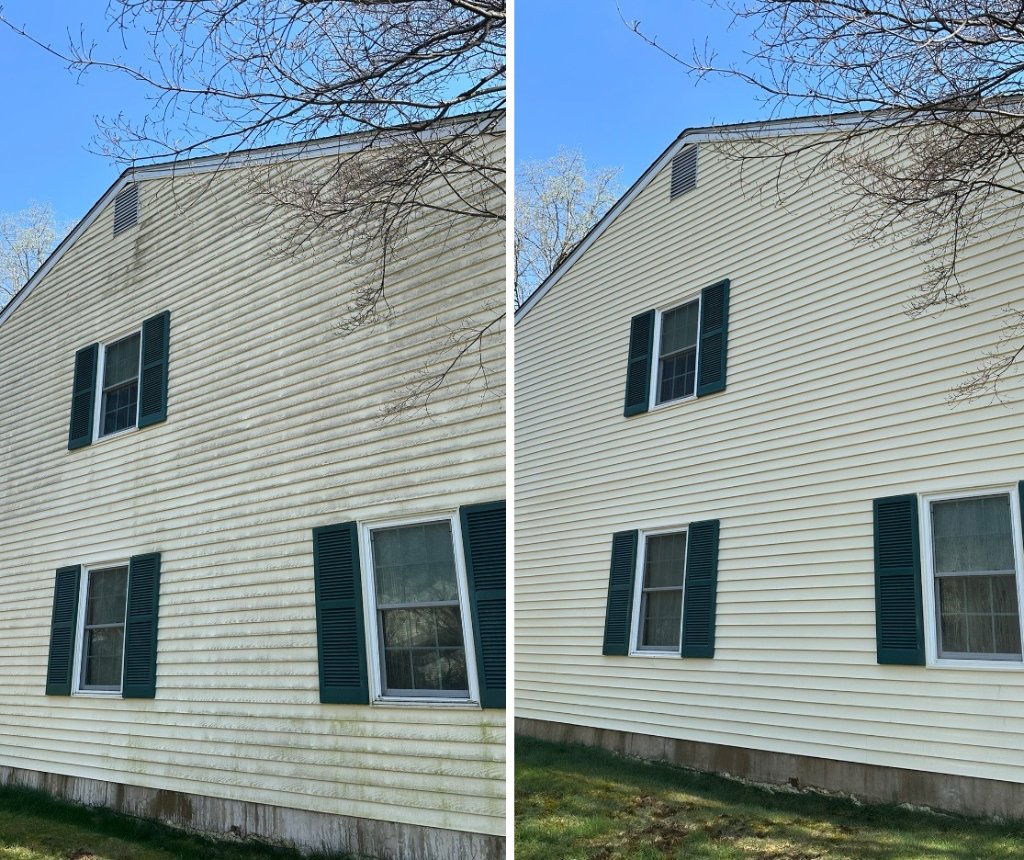
Walk around your house on a damp October afternoon and you will probably notice the same thing on many Montgomery County homes: the north side, and any other shaded wall, has a green or gray film while the sunny sides look fine. That film is rarely just dirt. It is living growth, and understanding what feeds it makes it much easier to deal with.
What the Green Film Actually Is
Most of what homeowners see on siding falls into three groups, and they often appear together:
- Algae: usually shows up as a green tint or powdery green film, most often on shaded, damp walls.
- Mildew: tends to look like gray or black specks or patches that can spread into larger blotches.
- Mold: can look similar to mildew and thrives anywhere moisture lingers, including near the base of the wall and around trim.
From the driveway it can be hard to tell them apart, and it does not need to be perfect. What matters is that all three are organic growth that lives on the siding surface, which is why wiping or rinsing lightly often removes the color for a short time but not the growth itself.
Why the North Side Gets It Worst
Algae and mildew need moisture more than anything else. A wall that gets direct sun dries out quickly after rain or morning dew. A north-facing wall, or one shaded by trees, fences, or a neighboring house, stays damp far longer. In southeastern Pennsylvania, where fall and spring are often cool and wet, a shaded wall can stay damp for days at a time. That steady moisture is exactly the condition these organisms need to establish and spread.
Other Things That Feed Siding Growth
- Tree cover and landscaping: shrubs and branches touching or crowding the wall block sunlight and airflow, and they drip moisture onto the siding.
- Overflowing gutters: water spilling over the edge runs down the same strip of siding again and again, leaving vertical green or black streaks. If you see streaks directly below a gutter line, gutter cleaning is worth doing alongside the siding.
- Sprinklers and splash-back: irrigation that sprays the wall, or rain splashing mulch and soil onto lower siding, keeps the bottom few feet damp and dirty.
- Leaf debris: fallen leaves packed against the foundation hold moisture against the wall through the fall.
Why It Comes Back After a Quick Rinse
Growth on siding is rooted into the surface texture, not just resting on top of it. A light rinse or a quick pass with a hose may knock off some of the visible color, but the remaining organisms regrow as soon as moisture returns, and in a damp shaded spot that can happen quickly. This is also why the green often reappears first in the exact same places each year.
Why High Pressure Is the Wrong Fix for Vinyl
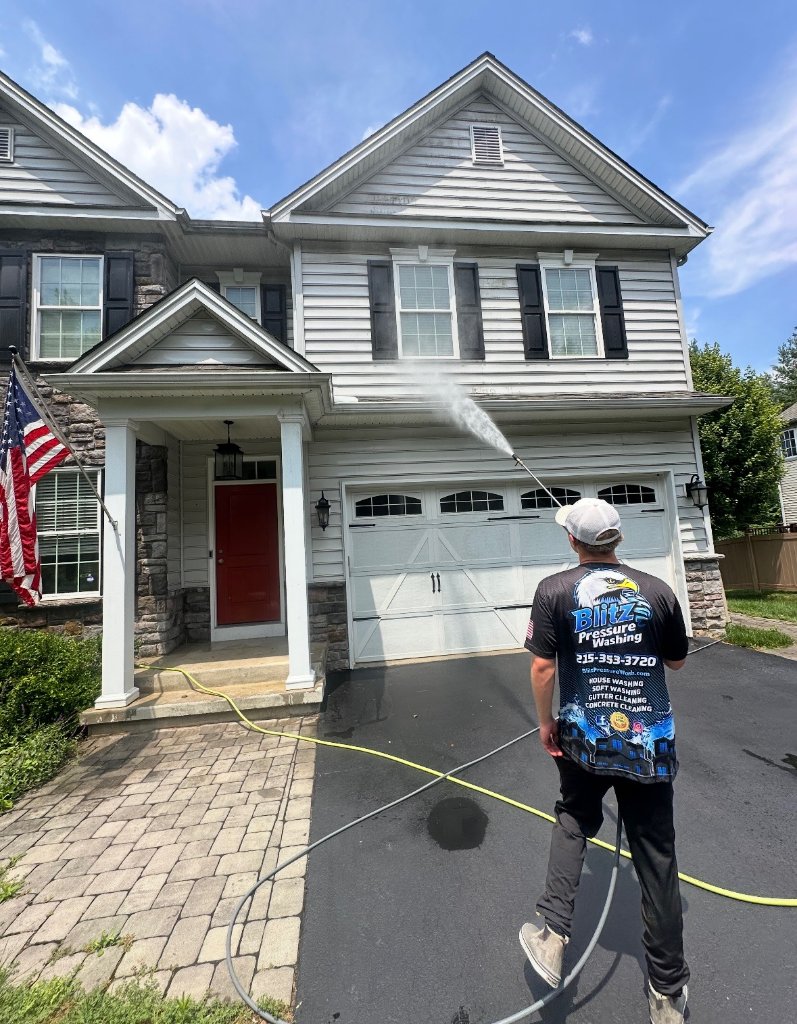
It is tempting to blast the wall with a rental pressure washer, but vinyl panels are built to shed rain flowing downward, not water driven upward and behind them. High pressure can force water behind the panels, crack older or brittle vinyl, and leave marks that look worse than the algae did. For siding and other delicate surfaces, the safer approach is soft washing, which uses low pressure along with a cleaning solution that treats the growth itself rather than relying on force. You can read more about how the methods differ in our guide to soft washing versus pressure washing.
Practical Steps You Can Take Now
- Trim back plants and branches so at least a few inches of open air sit between foliage and the wall.
- Clear leaves and mulch away from the base of the siding.
- Check that gutters and downspouts drain properly, so water is not running down the wall.
- Adjust sprinkler heads that spray the house.
- Do not use a pressure washer on vinyl siding. If you want to try something yourself, stick to a gentle rinse and a soft brush on a small test area first.
These steps will not remove growth that is already there, but they reduce how fast it returns.
Why Fall Is a Good Time to Deal With It
Cool, damp weather is when shaded siding stays wet the longest, so growth you leave in place through the fall and winter has months of ideal conditions. Cleaning before winter means you start the cold season with a clean surface, instead of finding a much larger green or gray patch on the shaded side next spring.
Professional Cleaning for Siding in Montgomery County
Blitz Pressure Washing offers house washing and vinyl cleaning using methods matched to each surface, along with soft washing for delicate materials like siding, painted trim, and roofs. Not sure what is growing on your home or which method fits? Call (215) 353-3720 or request a free quote online.