October 14, 2026
Soft Washing vs. Pressure Washing: Which Is Right for Your Montgomery County Home?
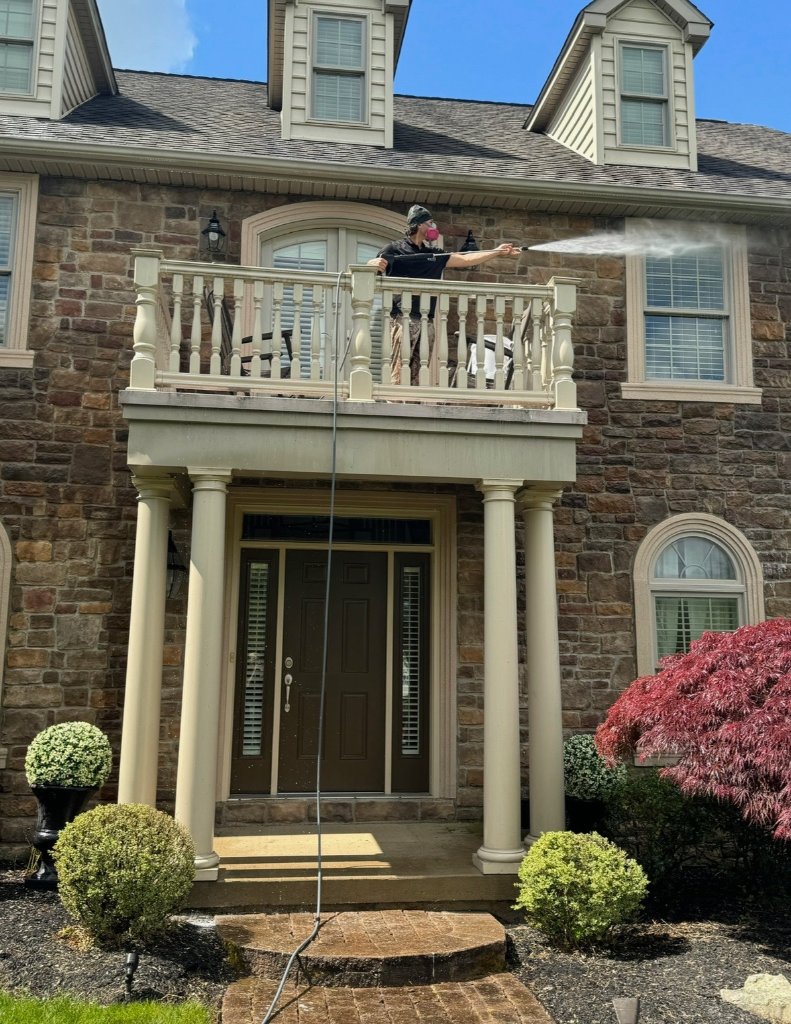
Most homeowners use "pressure washing" as a catch-all term for cleaning the outside of a house. In practice, professionals use two very different methods depending on the surface: pressure washing and soft washing. Choosing the wrong one can leave your home looking dirty again within months, or worse, cause damage that costs far more than the cleaning itself. Here's how the two methods compare and how to know which one your Montgomery County home needs.
The Short Answer
Hard, durable surfaces like concrete, brick pavers, and stone usually call for pressure washing. Softer or more delicate surfaces like vinyl siding, stucco, painted wood, and asphalt shingle roofs call for soft washing. Many homes need both, which is why a good exterior cleaning plan treats each surface on its own terms rather than hitting everything with the same nozzle.
What Pressure Washing Is
Pressure washing relies on force. A machine pushes water out at high pressure, typically in the range of 2,500 to 3,000 PSI for residential concrete work, and the impact of that water physically strips away dirt, grime, gum, and stains. Hot water adds another layer of cleaning power for oil and grease, which is why it works so well on driveways and garage aprons.
The strength of pressure washing is also its limitation. It removes what it can reach on the surface, but it does not kill organic growth like algae and mildew at the root. On porous surfaces, that growth often returns quickly. On delicate surfaces, the force itself becomes the problem.
What Soft Washing Is
Soft washing flips the approach. Instead of relying on force, it uses low pressure, often comparable to a strong garden hose, combined with a cleaning solution designed to break down and kill algae, mold, mildew, and lichen. The solution is given time to work before the surface is gently rinsed.
Because the cleaning agent does the heavy lifting, soft washing reaches into the texture of siding and shingles where organic growth hides. That is the main reason results tend to last much longer than a high-pressure rinse on the same surface. You can learn more about how we handle it on our soft washing service page.
Which Method Fits Each Surface
- Vinyl and aluminum siding: Soft wash. High pressure can force water behind panels and crack older vinyl.
- Stucco and EIFS: Soft wash. These finishes can chip or etch under direct high pressure.
- Asphalt shingle roofs: Soft wash only. Pressure strips the protective granules that shield shingles from sun damage.
- Painted wood and trim: Soft wash. High pressure can lift paint and gouge the wood.
- Wood decks and fences: Low to moderate pressure with the right technique, so the grain is cleaned rather than torn up.
- Concrete driveways, sidewalks, and patios: Pressure wash, often with hot water and pre-treatment for oil and rust.
- Brick and stone: Usually pressure washing at an appropriate setting, though older or soft brick and mortar may need a gentler approach.
Why High Pressure Damages Siding and Roofs
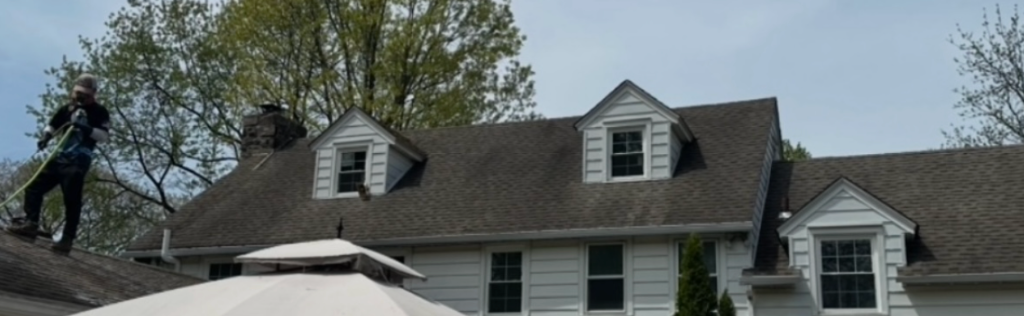
The black streaks you see on roofs across Montgomery County are usually a type of algae, not dirt. It feeds on the limestone filler in asphalt shingles. Blasting it with high pressure may remove some of the visible staining, but it also knocks loose the granules that protect the shingle, which can shorten the life of the roof. That is why roofing manufacturers and industry groups generally advise against high-pressure cleaning of shingle roofs. See how a safe approach works on our roof cleaning page.
Siding has a similar weakness. Vinyl panels overlap to shed rain from above, not water sprayed upward at high pressure. When water gets driven behind the panels, it can soak sheathing and insulation and create the kind of hidden moisture problem that leads to mold inside the wall.
Why Soft Washing Results Last Longer
Pennsylvania's humid summers and wet falls give algae and mildew plenty of moisture to work with, especially on north-facing walls and shaded sections of a home. If growth is only scraped off the surface, the remaining spores start regrowing almost immediately. Soft washing treats the growth itself, so siding and roofs typically stay clean noticeably longer than they would after a high-pressure rinse alone.
Is Soft Washing Safe for Plants and Pets?
When done properly, yes. Professionals pre-wet landscaping before application, use the solution at the correct dilution, and rinse plants again afterward. Keeping pets indoors until surfaces are rinsed and dry is a simple precaution. The risk comes mainly from DIY mixes applied at the wrong strength or without rinsing nearby plants.
A Word on DIY Pressure Washers
Rental and big-box pressure washers are powerful enough to damage siding, wood, and roofs in inexperienced hands. Common results include zebra striping on driveways, etched concrete, lifted paint, and furry, splintered deck boards. If you do tackle a project yourself, stick to concrete and test a small, hidden area first. For siding, stucco, and roofs, it is usually worth leaving the work to someone who uses the right method for each surface.
Timing Matters This Time of Year
Fall is a good window to clean before freezing temperatures arrive. Algae and mildew that sit through winter under damp conditions tend to be harder to remove in spring. A fall soft wash for siding and roofs, combined with driveway cleaning before road salt season, sets your home up to come through winter in better shape.
Not Sure Which Your Home Needs?
Most homes are a mix of surfaces, and the right answer often involves both methods. Blitz Pressure Washing serves homeowners throughout Montgomery County and matches the cleaning method to every surface on your property. With 190+ five-star Google reviews, we take care to get it right the first time. Learn more about our full range of pressure washing services, call (215) 353-3720, or request a free quote online.