September 19, 2026
How Often Should You Pressure Wash Your Montgomery County Home?
Pennsylvania's mix of humid summers, wet falls, and freeze-thaw winters causes dirt, algae, and mildew to build up on home exteriors faster than most homeowners expect. Knowing when each surface needs attention helps you catch problems early, before staining sets in or buildup starts causing damage.
Siding: Once a Year, Ideally in Spring
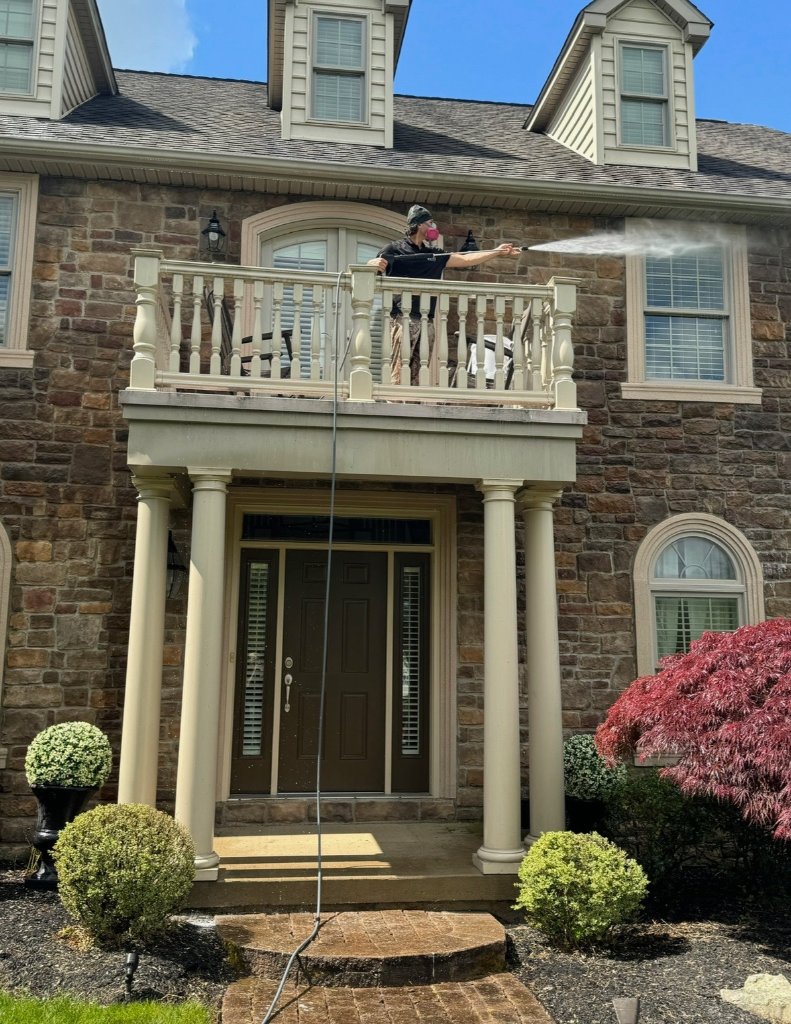
After a Montgomery County winter, siding typically carries a season's worth of road grime, pollen, and algae streaking. A spring wash resets your home's curb appeal before the humid summer months give mold and mildew a chance to take hold. Vinyl, stucco, and brick each respond differently to cleaning, so the right method depends on the surface: soft washing uses low pressure and specialized solutions for siding, while brick and concrete can typically handle a more direct approach.
Driveways and Walkways: Every 12 to 18 Months
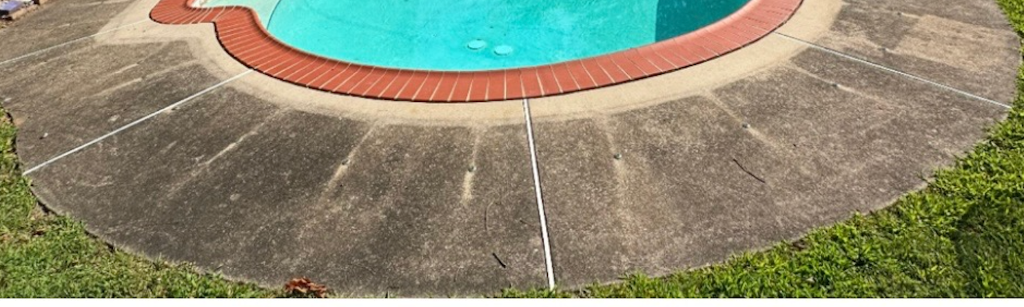
Concrete is porous, so oil stains, tire marks, and moss between expansion joints accumulate gradually. If you notice green or black staining in shaded areas, that's algae getting a foothold, and it tends to spread faster than it looks. Regular concrete cleaning also helps prevent the kind of surface staining that becomes much harder to lift once it has set in over multiple seasons.
Decks and Patios: Before and After Summer
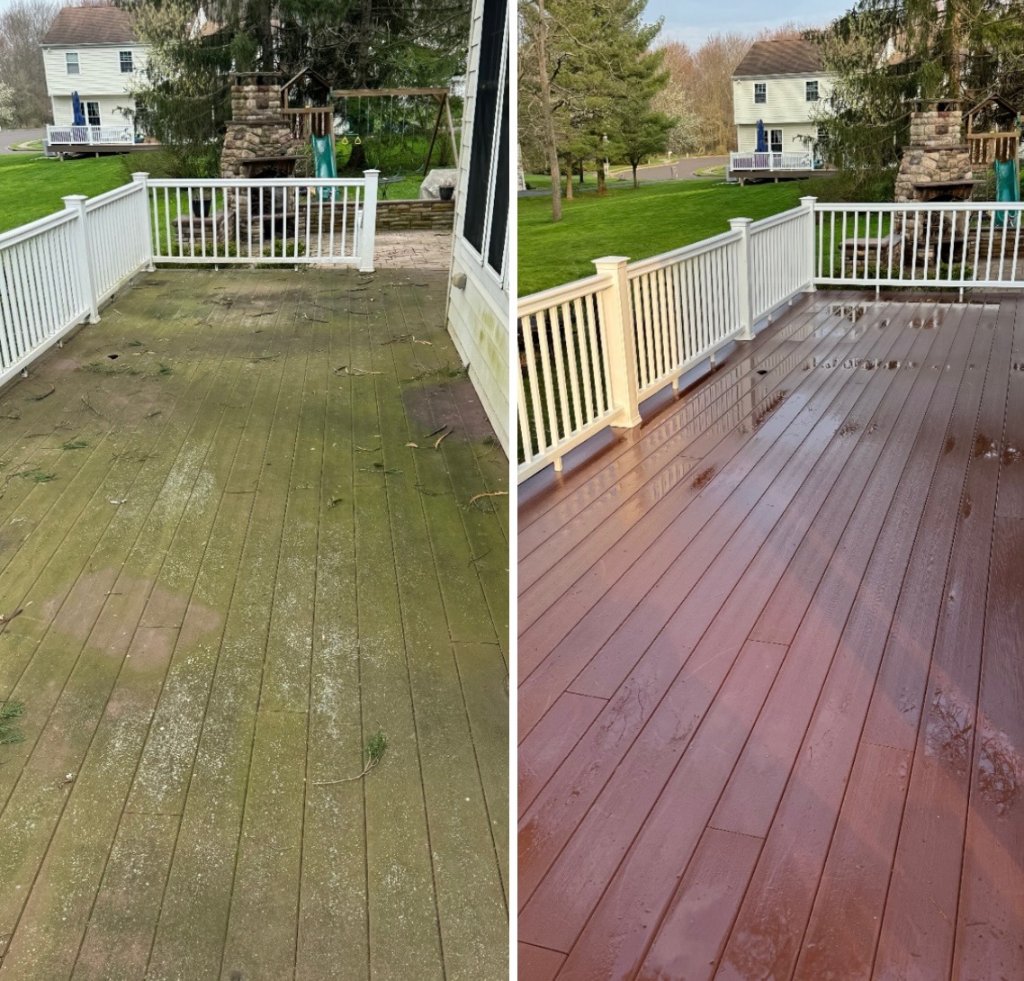
A pre-summer wash clears winter buildup before you're using the space daily. A fall wash removes pollen and organic debris before it sits trapped under snow cover all winter, which is often when wood staining and mildew set in hardest. Wood decks in particular benefit from cleaning that respects the grain rather than blasting it, which is why deck cleaning uses pressure and technique suited to the material.
Roofs: Every 2 to 3 Years, Soft Wash Only
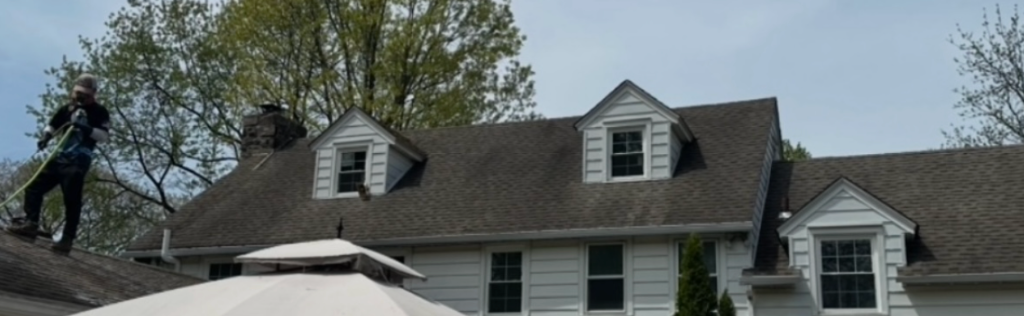
Asphalt shingles should never be cleaned with direct high-pressure water. The force can strip protective granules and shorten the life of the roof. A soft wash, meaning low pressure combined with an appropriate cleaning solution, removes algae streaking safely without damaging shingles. If you see dark streaks running down your roofline, that's typically algae, not just dirt, and it spreads over time if left untreated.
Signs Your Property Is Overdue for a Wash
- Green or black streaks on siding, especially on north-facing walls that get less direct sun
- Slippery or slick patches on walkways, decks, or patios
- Visible moss growing in mortar joints, deck boards, or roof valleys
- A dull, faded look to surfaces that used to look brighter
Why a Regular Schedule Matters
Staying on a consistent schedule is generally more cost-effective than waiting. Stains and organic growth that sit for multiple seasons bond more deeply to the surface, often requiring stronger treatment and more time to remove than they would have needed earlier on. Regular cleaning also makes it easier to spot developing issues, like early wood rot on a deck or granule loss on a roof, while they're still minor.
If it's been a while since your home's exterior was cleaned, a walk around the property is a good starting point. Check the shaded, north-facing areas first, since that's usually where algae and mildew show up earliest.